
17 August 2026
High Cholesterol: One Number, Not the Whole Story
A high cholesterol result matters, but it does not tell your whole heart-health story. Here is how doctors assess your overall cardiovascular risk.

Dr Sam Rajapaksha · MBBS
Founder & Clinical Lead, wHealthy Labs · 17 August 2026 · 5 min read
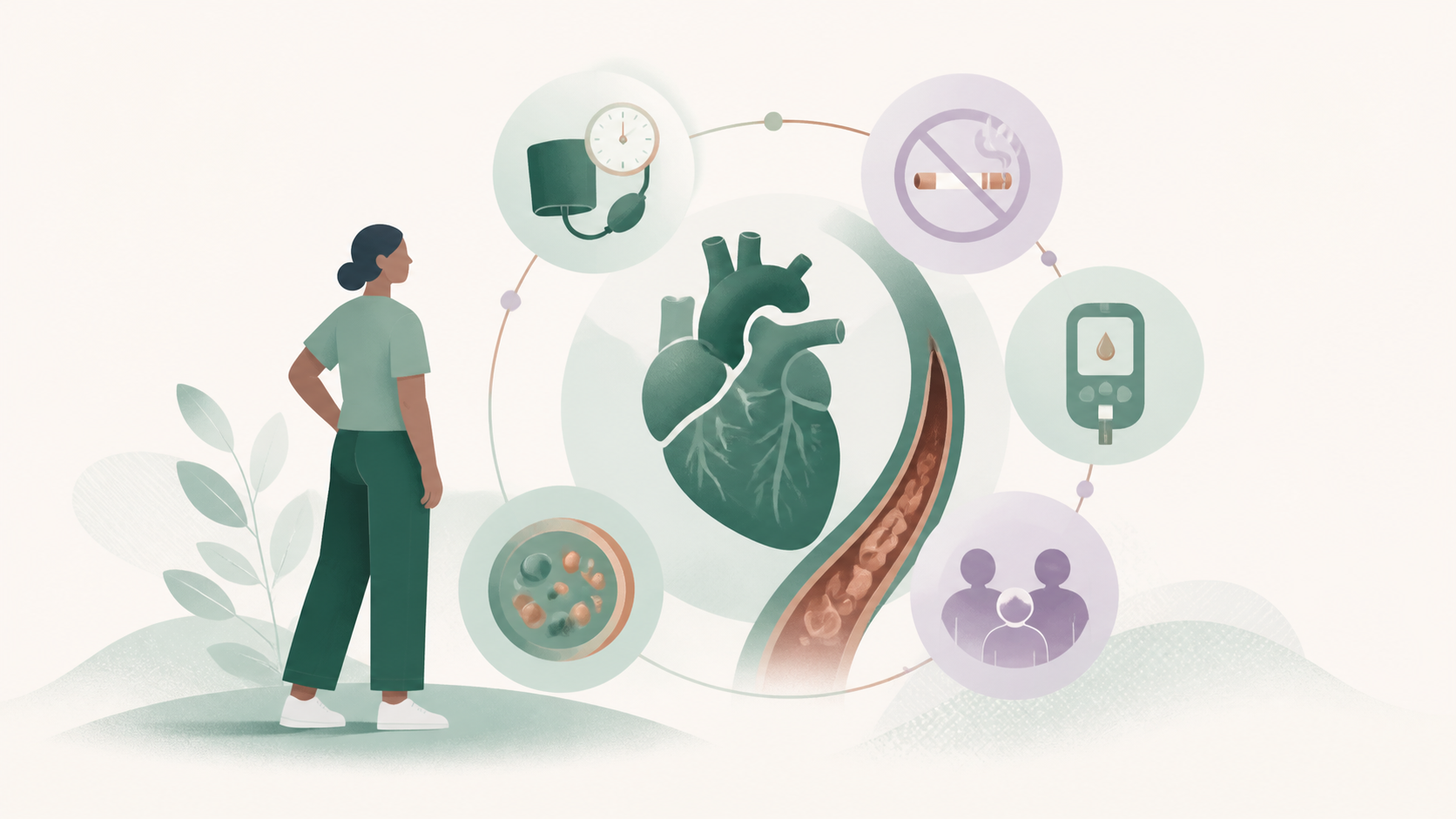
A high cholesterol result can feel frightening. But it is not a diagnosis of heart disease, and it does not tell your whole health story.
Cholesterol matters—particularly LDL cholesterol, which contributes to fatty plaque building up in arteries over time. However, doctors make prevention decisions by looking at your overall cardiovascular risk, not one result in isolation.
What does a cholesterol test show?
A standard lipid profile usually includes:
- LDL cholesterol: carries cholesterol through the bloodstream; excess LDL can build up in artery walls, and higher lifelong exposure increases the risk of heart attack and stroke.
- HDL cholesterol: helps transport cholesterol away from the bloodstream. It is considered as part of the overall pattern, not treated as a protective score by itself.
- Triglycerides: another type of blood fat that can rise with diabetes, alcohol use, excess body weight and some genetic conditions.
- Total and non-HDL cholesterol: summary measures that help your clinician interpret the result.
The Heart Foundation advises that cholesterol targets vary according to a person’s wider risk. This is why the same LDL result can lead to different recommendations for two different people.
Doctors assess your absolute cardiovascular risk
Absolute cardiovascular risk is your estimated chance of having a heart attack, stroke or other vascular disease within a set period.
The current Australian cardiovascular disease risk calculator estimates risk over the next five years. It considers factors including:
- Age and sex at birth
- Smoking status
- Systolic blood pressure
- The ratio of total cholesterol to HDL cholesterol
- Diabetes
- Current cardiovascular medicines
- Atrial fibrillation and socioeconomic circumstances, when relevant
For people with diabetes, kidney function, blood glucose control, diabetes duration, body mass index and insulin use can further refine the estimate.
Doctors also consider factors that are not fully captured by the basic calculation. These include family history of early cardiovascular disease, ethnicity, kidney disease and severe mental illness. Familial hypercholesterolaemia—an inherited cause of very high cholesterol—and moderate-to-severe chronic kidney disease are treated as high-risk conditions without using the calculator.
For eligible adults without known cardiovascular disease, the Australian categories are:
- Low risk: less than 5% over five years
- Intermediate risk: 5% to less than 10%
- High risk: 10% or more
The calculator is not designed for everyone. Your GP can decide whether it applies to your age, health history and circumstances.
The same cholesterol result can mean different things
Imagine two people with the same cholesterol result.
One is younger, does not smoke, has normal blood pressure and does not have diabetes or kidney disease. The other is older, smokes, has high blood pressure and has diabetes. Their cholesterol number may match, but their chance of having a cardiovascular event in the next five years can be very different.
This does not mean a younger person should ignore high LDL cholesterol. Risk builds over a lifetime, and a very high result may suggest an inherited condition. It means the number should be interpreted in context rather than becoming a reason for panic.
When lifestyle changes may come first
For someone at low overall risk who does not have an inherited cholesterol disorder or another high-risk condition, lifestyle changes are often the first step. Australian guidance does not routinely recommend cholesterol-lowering medicine for the low-risk group.
Helpful changes include:
- Follow a heart-healthy eating pattern. Base meals around vegetables, fruit, wholegrains, legumes, nuts and seeds. Choose fish and other minimally processed protein foods, and replace saturated fats such as butter with unsaturated fats such as olive oil.
- Move regularly. Current Australian guidance recommends at least 30 minutes of moderate-to-vigorous activity on most days, muscle-strengthening activity on two or more days each week, and less prolonged sitting. Start with an amount that is safe and achievable for you.
- Work towards a healthy weight, if relevant. Even modest, sustainable changes can improve blood pressure, triglycerides and blood-sugar control. Weight is only one part of health and should be approached without blame.
- Do not smoke. Stopping smoking can substantially reduce cardiovascular risk, even if the cholesterol number itself changes little.
- Manage the whole picture. Good sleep, blood-pressure control, diabetes care and taking prescribed medicines all matter.
Lifestyle changes can improve cholesterol and overall health, but the size of the cholesterol change varies between people. Genes, age, medicines and medical conditions also influence the result.
When medicine may still be important
Lifestyle and medicine are not competing choices. Some people benefit from both.
The Australian guideline generally recommends cholesterol-lowering and blood-pressure-lowering medicines for people at high five-year risk. Medicine may also be important if you:
- Already have cardiovascular disease
- Have familial hypercholesterolaemia or another inherited lipid disorder
- Have moderate-to-severe chronic kidney disease
- Have diabetes or other factors that raise your overall risk
- Continue to have a concerning cholesterol pattern despite lifestyle changes
Statins lower LDL cholesterol and reduce heart attacks and strokes in people who are likely to benefit. The decision should include your estimated absolute benefit, possible harms, preferences and other health conditions.
Do not stop a prescribed cholesterol medicine without speaking with your clinician.
Questions to ask your GP
Instead of asking only, “Is my cholesterol high?”, consider asking:
- What were my LDL, HDL, triglyceride and non-HDL results?
- What is my estimated five-year cardiovascular risk?
- Does the Australian risk calculator apply to me?
- Do my family history or other health conditions change the interpretation?
- Could this be familial hypercholesterolaemia?
- What lifestyle change would make the biggest difference for me?
- If medicine is recommended, what is my likely benefit in absolute terms?
- When should we repeat the test or review the plan?
A total cholesterol result around 7.5 mmol/L or higher should prompt assessment for possible familial hypercholesterolaemia. It does not confirm the condition by itself, but it should not be dismissed as “just lifestyle”.
The key message
High cholesterol deserves attention, but not panic. It is one important part of a much bigger picture that includes age, blood pressure, smoking, diabetes, kidney health, family history and more.
For many people at lower overall risk, sustainable lifestyle changes are a powerful first step. For people at higher risk, medication can add important protection. The best plan is the one based on your whole health picture and made with a qualified clinician.
Medical disclaimer
This article provides general information and is not a substitute for individual medical advice. Cholesterol results and cardiovascular risk should be interpreted by a qualified health professional who knows your medical history, medicines and circumstances. Do not start or stop treatment based on this article. Read our full medical disclaimer.